
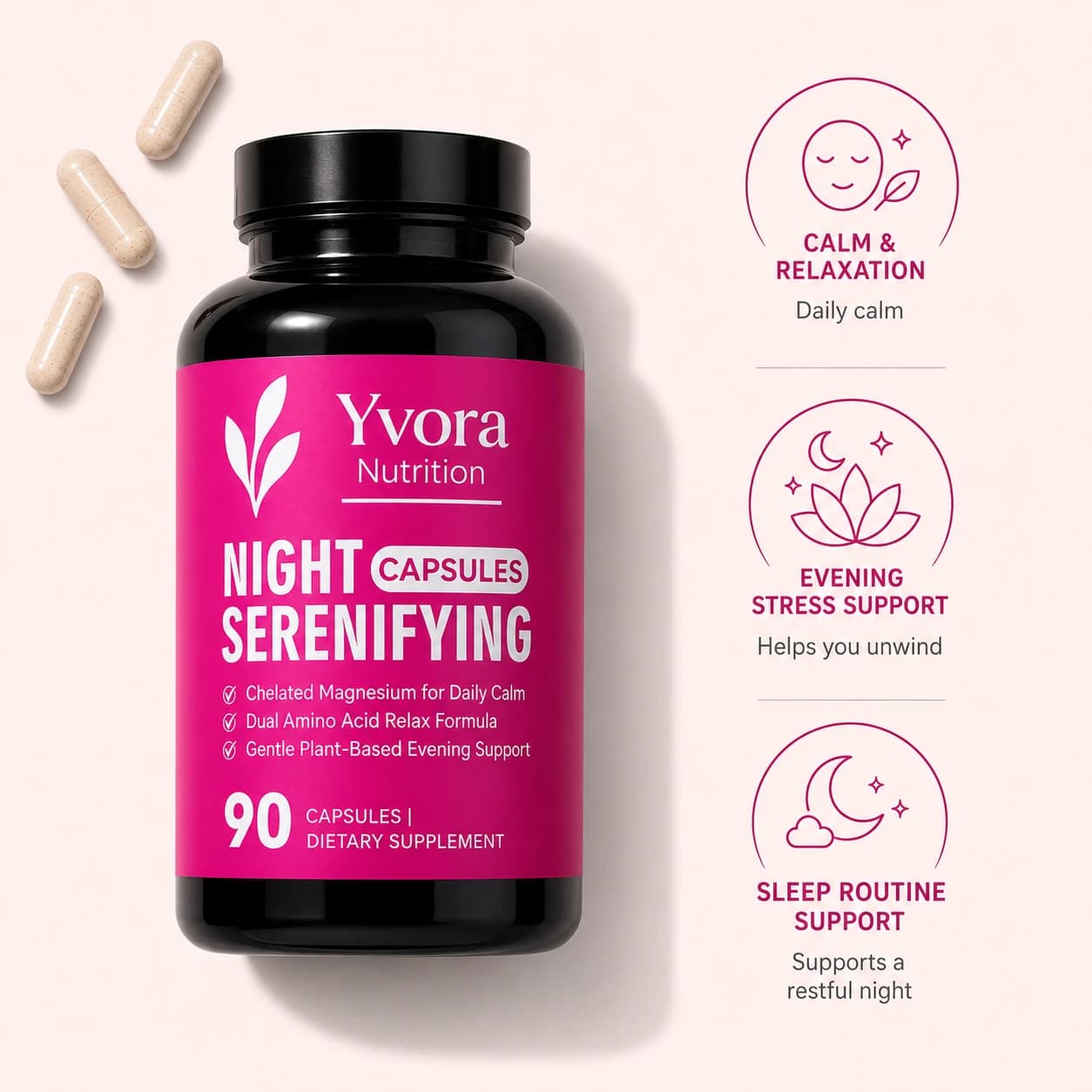
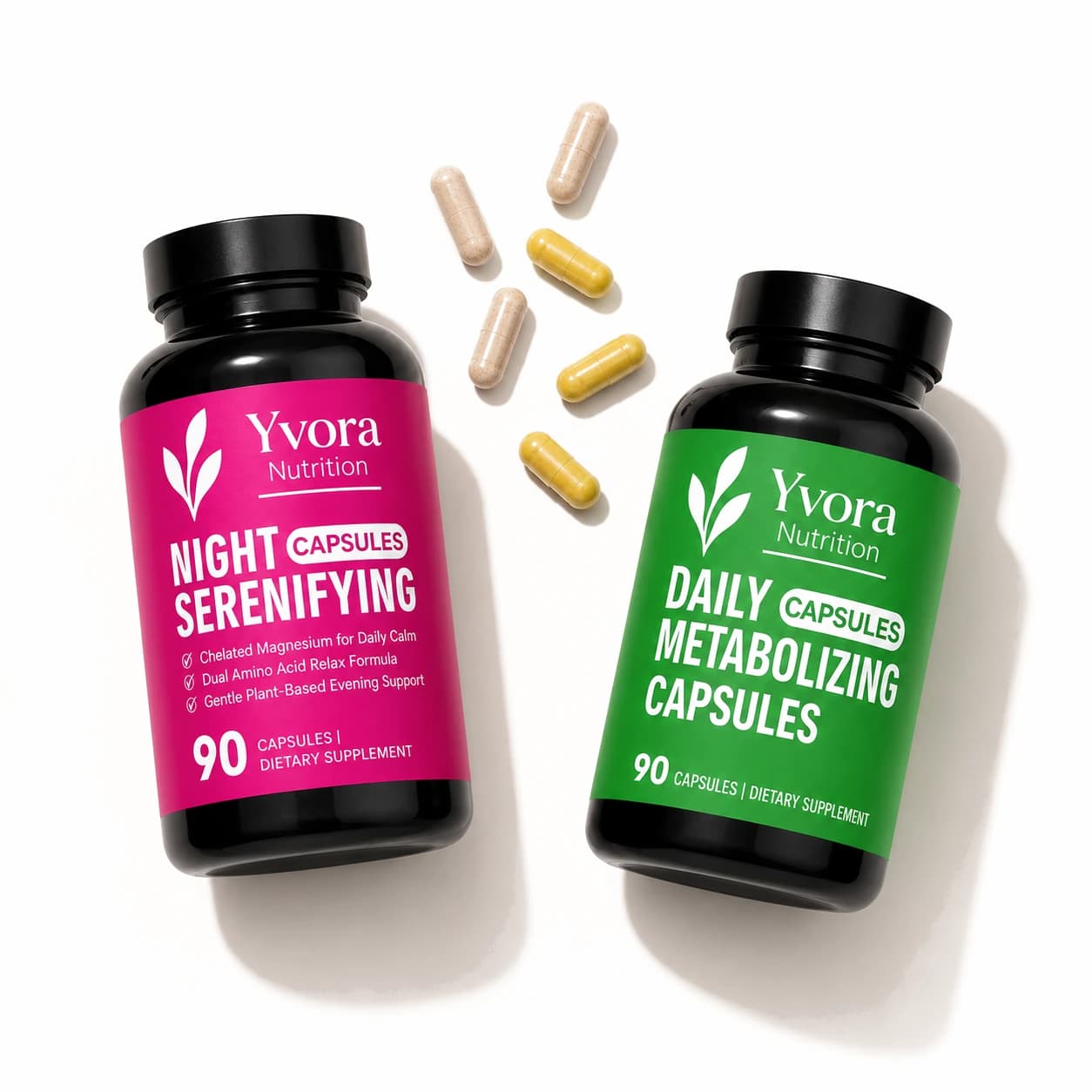
A magnesium supplement label may show two very different numbers.
The front of the bottle might highlight a large amount of magnesium glycinate, while the Supplement Facts panel lists a much smaller amount next to the word Magnesium.
That does not necessarily mean the label is incorrect. The two numbers may be measuring different things:
- Magnesium glycinate describes the form or source of magnesium.
- Elemental magnesium describes how much actual magnesium the serving provides.
Understanding this difference is essential when comparing supplements, calculating your total intake, and determining what a product really provides.
The National Institutes of Health explains that the amount listed as Magnesium in a US Supplement Facts panel represents elemental magnesium, not the total weight of the magnesium-containing compound.[1]
Key Takeaways
- Magnesium glycinate is a magnesium compound made with glycine.
- Elemental magnesium is the amount of actual magnesium provided by that compound.
- On a compliant US Supplement Facts panel, the number beside Magnesium represents elemental magnesium.
- Always check the serving size before comparing two products.
- A larger magnesium glycinate compound weight does not automatically mean a larger magnesium dose.
- Magnesium needs should ideally be considered alongside food intake, medications, health conditions, and professional guidance.
What Is Magnesium Glycinate?
Magnesium glycinate is a magnesium salt of glycine, an amino acid. It is also commonly described as a chelated magnesium compound because magnesium is associated with glycine molecules.[2]
In simple terms, magnesium glycinate contains two parts:
- Magnesium
- Glycine
Because the complete compound includes both magnesium and glycine, the total weight of the ingredient is higher than the weight of magnesium alone.
This is why a product could use several hundred milligrams of a magnesium glycinate ingredient while providing a much smaller amount of elemental magnesium.
Magnesium glycinate is the delivery form. Elemental magnesium is the nutrient amount.
What Does "Elemental Magnesium" Mean?
Elemental magnesium refers to the actual amount of the mineral magnesium in a product.
This is the number that matters when you are:
- Comparing magnesium supplements
- Calculating your total supplemental intake
- Reviewing the product's percentage of Daily Value
- Discussing a magnesium dose with a healthcare professional
For example, consider this hypothetical Supplement Facts entry:
Serving Size: 3 Capsules
Magnesium: 120 mg (as magnesium glycinate) - 29% Daily Value
This means the complete three-capsule serving provides:
- 120 mg of elemental magnesium
- Magnesium supplied in the form of magnesium glycinate
- Approximately 29% of the FDA Daily Value
It does not mean that each capsule provides 120 mg of magnesium. Because the serving contains three capsules, the average amount would be 40 mg of elemental magnesium per capsule.
The FDA's current Daily Value for magnesium is 420 mg for adults and children aged four years and older.[1]
Magnesium Glycinate vs. Elemental Magnesium
Magnesium glycinate and elemental magnesium are not two alternative supplements. They describe two different characteristics of the same ingredient.
| Term | What it describes | Why it matters |
|---|---|---|
| Magnesium glycinate | The form or source of magnesium | Helps identify the magnesium compound used |
| Elemental magnesium | The amount of actual magnesium | Allows you to compare nutrient doses |
| Serving size | The number of capsules, tablets, scoops, or packets per serving | Determines how much magnesium you receive at one time |
| % Daily Value | The serving's contribution compared with the 420 mg Daily Value | Provides general context for comparing products |
A useful way to read the label is:
Magnesium 120 mg = the amount of actual magnesium
As magnesium glycinate = the source of that magnesium
Why the Front of the Bottle Can Be Confusing
The Supplement Facts panel is usually more useful than the largest number on the front of the package.
A front label might emphasize:
- 1,000 mg Magnesium Glycinate
- High-Potency Magnesium Complex
- Chelated Magnesium Formula
- Maximum-Strength Magnesium
These descriptions may refer to the total ingredient or compound weight rather than the amount of elemental magnesium.
To understand the actual magnesium dose, turn to the Supplement Facts panel and look for three things:
- Serving Size
- Magnesium amount in milligrams
- The source shown in parentheses
The FDA requires dietary supplement labels to identify dietary ingredients and the quantities provided per serving. The label may also identify the nutrient source, such as magnesium glycinate.[3]
A prominent number on the front of a bottle should therefore never replace a careful reading of the Supplement Facts panel.
How to Read a Magnesium Supplement Label in Five Steps
Step 1: Check the Serving Size
Do not assume that the listed amount is provided by one capsule. A product may list a serving as one capsule, two or three capsules, one scoop, or one packet.
Under FDA guidance, serving size generally reflects the maximum amount recommended for consumption on one occasion in the product directions.[3] If the panel says Serving Size: 3 Capsules, you must take three capsules to receive the full amount listed per serving.
Step 2: Find the Word "Magnesium"
The milligram amount next to Magnesium is the elemental magnesium amount.
Magnesium - 100 mg
This means the serving provides 100 mg of actual magnesium. The word elemental does not always appear on the panel. The mineral name and corresponding milligram amount are generally sufficient.
Step 3: Identify the Source
Magnesium 100 mg (as magnesium glycinate)
Other products might use magnesium citrate, oxide, chloride, lactate, or a combination of forms. The source tells you which compound supplies the magnesium. It does not replace the elemental magnesium amount.
Step 4: Review the Percentage of Daily Value
Because the magnesium Daily Value is 420 mg, 84 mg is approximately 20%, 105 mg is 25%, 210 mg is 50%, and 420 mg is 100%.
The Daily Value is a general labeling reference, not a personalized recommendation based on age, sex, diet, medical history, or magnesium status.
Step 5: Calculate the Per-Capsule Amount When Necessary
Serving Size: 3 Capsules
Magnesium: 120 mg
120 mg / 3 capsules = 40 mg per capsule
This calculation can help when comparing products with different serving sizes. Consumers should still follow labeled directions unless a healthcare professional recommends otherwise.
Why You Should Not Estimate Elemental Magnesium From the Ingredient Name
Different magnesium compounds contain different proportions of magnesium by weight. Total weight can also be influenced by the precise chemical form, hydration state, formulation, and raw-material specifications.
The most reliable consumer-facing number is the declared magnesium amount in the Supplement Facts panel.
When reviewing a product, ask:
- How much elemental magnesium is provided per serving?
- How many capsules are in one serving?
- Which magnesium source is used?
- Does the brand provide clear labeling?
- Has the finished product been tested to confirm its declared amount?
A transparent label should allow you to answer the first three questions without contacting the company.
Does Magnesium Form Affect Absorption?
Magnesium absorption can vary among forms and formulations. The NIH notes that forms that dissolve well in liquid are generally absorbed more completely than less soluble forms. Research has also found differences between magnesium products in dissolution and measures of bioavailability.[1][4]
This does not mean every product using a particular magnesium form will perform identically. Absorption and tolerability may also be influenced by:
- The amount consumed at one time
- The complete formulation and product dissolution
- Food intake and current magnesium status
- Digestive health
- Other supplements and medications
Magnesium glycinate is frequently marketed as a well-tolerated form, but responsible product evaluation should go beyond the ingredient name. The actual elemental dose, complete formula, manufacturing quality, and finished-product testing also matter.
Claims that one magnesium form is universally the best for every person are generally too broad.
How Much Magnesium Do Adults Need?
Recommended magnesium intake includes magnesium from food, beverages, dietary supplements, and magnesium-containing medications.
| Group | Recommended daily amount |
|---|---|
| Men aged 19-30 | 400 mg |
| Men aged 31 and older | 420 mg |
| Women aged 19-30 | 310 mg |
| Women aged 31 and older | 320 mg |
| Pregnancy | Generally 350-360 mg for adults, depending on age |
These amounts are not instructions to obtain the entire daily intake from supplements. Magnesium is naturally available in leafy green vegetables, legumes, nuts, seeds, whole grains, and some fortified foods.
The NIH recommends meeting nutritional needs primarily through food when possible, while recognizing that supplements may be useful when specific needs cannot be met through diet alone.[1]
The 350 mg Supplemental Upper Limit Explained
For healthy adults, the Tolerable Upper Intake Level for magnesium from dietary supplements and medications is 350 mg per day. This limit does not include magnesium naturally present in foods and beverages.[1]
A person could consume magnesium through food and also use a supplement without applying the 350 mg limit to the food portion. However, individual needs and safety considerations can vary.
The upper limit is not a target. It represents the maximum daily supplemental intake that is generally considered unlikely to cause adverse effects in healthy individuals.
Healthcare professionals may sometimes recommend different amounts for specific medical reasons, but higher-dose use should be professionally supervised.
Common Magnesium Label Mistakes
Mistake 1: Comparing Compound Weight Instead of Elemental Magnesium
A larger magnesium glycinate number does not necessarily mean the product provides more actual magnesium. Compare the amount listed next to Magnesium in the Supplement Facts panel.
Mistake 2: Ignoring Serving Size
A product providing 120 mg per three capsules is different from one providing 120 mg per capsule. Compare products on an equal per-serving or per-capsule basis.
Mistake 3: Assuming 100% Daily Value Is Right for Everyone
Daily Value is a labeling reference, not an individualized supplement recommendation. Food intake may already provide a significant amount of magnesium.
Mistake 4: Adding Multiple Products Without Checking for Overlap
Magnesium may appear in multivitamins, nighttime supplements, electrolyte powders, mineral blends, antacids, and laxatives. Review the complete daily routine.
Mistake 5: Assuming More Is Always Better
High supplemental magnesium intake can cause diarrhea, nausea, and abdominal cramping. Extremely high intake can cause more serious toxicity, particularly when the body cannot remove excess magnesium effectively.[1]
Who Should Speak With a Healthcare Professional Before Taking Magnesium?
Professional guidance is particularly important for people who:
- Have impaired kidney function or kidney disease
- Regularly take prescription medications
- Use magnesium-containing laxatives or antacids
- Are pregnant or breastfeeding
- Are considering supplements for a diagnosed health condition
- Experience persistent symptoms they believe may be caused by magnesium deficiency
The risk of magnesium toxicity increases when kidney function is impaired because the body may be less able to eliminate excess magnesium.[1]
Magnesium can also interact with certain medications. It may reduce absorption of some oral bisphosphonates and can form complexes with tetracycline or quinolone antibiotics. Diuretics and proton pump inhibitors may also affect magnesium status.[1] Supplement timing should be discussed with a pharmacist or healthcare provider.
Our Formulation Perspective: Why We Focus on Elemental Magnesium
During review of our nighttime nutrition formula, one of the most important questions was whether the stated magnesium amount represented the total raw ingredient weight or the amount of elemental magnesium delivered per serving.
We focus on elemental magnesium because it is the number consumers can meaningfully use to:
- Understand the magnesium contribution of the formula
- Compare it with other products
- Review it alongside dietary intake
- Identify overlapping sources in a supplement routine
The source still matters, but a source name without a clear elemental amount does not provide enough information.
State what the ingredient is, state what it provides, and make the serving size easy to understand.
This reflects our broader goal of creating a streamlined day-and-night nutrition routine without relying on oversized front-label numbers or unnecessarily complicated ingredient lists.
A Simple Magnesium Label Checklist
- What is the serving size?
- How much elemental magnesium is provided per serving?
- Which magnesium form supplies it?
- How much would be provided per capsule?
- What percentage of Daily Value does the serving provide?
- Is magnesium already present in another supplement or medication?
- Does the brand provide finished-product quality or testing information?
- Are there medications or health conditions to discuss with a professional?
Frequently Asked Questions
Does 500 mg of magnesium glycinate equal 500 mg of magnesium?+-
No. The 500 mg figure may represent the weight of the complete magnesium glycinate compound, which includes magnesium and glycine. Check the Supplement Facts panel for the amount listed directly next to Magnesium.
What does "Magnesium, as magnesium glycinate" mean?+-
Magnesium identifies the mineral and its elemental amount. As magnesium glycinate identifies the compound used as its source.
Why is the elemental magnesium number smaller?+-
Magnesium glycinate contains more than magnesium alone. The complete compound includes glycine, so only part of its total weight comes from magnesium.
Is 100 mg of elemental magnesium a high dose?+-
One hundred milligrams represents approximately 24% of the current 420 mg Daily Value. Whether it is appropriate depends on food intake, other supplements, age, health status, and professional recommendations.
Should I compare magnesium products by milligrams?+-
Yes, but compare elemental magnesium per equivalent serving, not only the total compound weight shown on the front of the bottle.
Is magnesium glycinate the same as elemental magnesium?+-
No. Magnesium glycinate is a source or form of magnesium. Elemental magnesium is the actual amount of magnesium supplied by that source.
Can I take magnesium every night?+-
Many magnesium products are intended for daily use, but suitability depends on the dose, diet, medications, and health status. Follow product directions and consult a qualified healthcare professional when appropriate.
The Bottom Line
The difference between magnesium glycinate and elemental magnesium is simpler than it first appears:
- Magnesium glycinate tells you the form.
- Elemental magnesium tells you the actual magnesium dose.
When reading a US supplement label, focus first on the Supplement Facts panel. Check the serving size, find the amount listed next to Magnesium, and review the source shown in parentheses.
Do not choose a magnesium product solely because it displays the largest number on the front of the bottle.
Clear labeling makes it easier to compare products, avoid accidental ingredient overlap, and make a more informed decision about your daily nutrition routine.
References
- National Institutes of Health, Office of Dietary Supplements. Magnesium: Fact Sheet for Health Professionals. Updated January 6, 2026.
- National Center for Biotechnology Information. PubChem Compound Summary: Magnesium Glycinate.
- US Food and Drug Administration. Dietary Supplement Labeling Guide: Chapter IV - Nutrition Labeling.
- Blancquaert L, Vervaet C, Derave W. Predicting and Testing Bioavailability of Magnesium Supplements. Nutrients. 2019;11(7):1663.